|
Published on Feb 8, 2026
 At the beginning of February, we accepted a kind invitation from the Church Primary and Secondary School in Pilsen to give a lecture on restoration ecology to their third- and fourth-year students. At the beginning of February, we accepted a kind invitation from the Church Primary and Secondary School in Pilsen to give a lecture on restoration ecology to their third- and fourth-year students.
The fourth-year students attended a lecture on the ecological restoration of human-disturbed sites, which helped them review what they had learned the previous year and prepare for an excursion they will take as part of their studies.
For the third-year students, we prepared a program on the restoration of species-rich meadows using regional seed mixtures. After a short presentation about the various options and methods for restoring species-rich meadows, an interactive activity involving magnifying glasses and seed identification was performed. This activity is always very popular. Finally, the students tested their newly acquired knowledge in a short assignment in which they were asked to propose and, above all, justify which method they would use for restoring meadow vegetation in model examples. Here, too, the students did very well and proved that they had absorbed all the information.
Based on the positive feedback, we believe that the students enjoyed both sessions.

Published on Jan 31, 2026
 It is kind of a tradition to look back at the year that just ended when a new one begins. We also would like to take a moment to remember all the experiences, the new skills we acquired, and the adrenaline that came with spending last year out on the Šumava springs. The year 2025 brought us tons of adventures out there as well as a few minor obstacles. But we proved to ourselves that neither bad weather nor the need to head into the field at five a.m. with a flashlight in hand can stop us from getting to know this habitat better. It is kind of a tradition to look back at the year that just ended when a new one begins. We also would like to take a moment to remember all the experiences, the new skills we acquired, and the adrenaline that came with spending last year out on the Šumava springs. The year 2025 brought us tons of adventures out there as well as a few minor obstacles. But we proved to ourselves that neither bad weather nor the need to head into the field at five a.m. with a flashlight in hand can stop us from getting to know this habitat better.
It is worth adding that none of our team members drowned in the springs, and no spring was harmed during the research.
In total, we visited 34 sites this year, monitoring vegetation, including mosses. Our colleagues from Brno managed to collect samples of aquatic invertebrates at 20 sites.
On January 7, 2026, the whole project team also met up to evaluate the past season, plan the upcoming one, and agree on how to continue working on the project results.
This project is funded with the support of the Technology Agency of the Czech Republic and the Ministry of the Environment of the Czech Republic within the Programme Prostředí pro život.
#RestoreSprings
   
Published on Jan 27, 2026
 The traditional conference of the Czech Botanical Society took place during the weekend of the 22nd and 23rd of November. This year's theme was research abroad. As you may already know from our webpage, we are active not only in the Czech Republic but also conduct sampling in various other countries. The traditional conference of the Czech Botanical Society took place during the weekend of the 22nd and 23rd of November. This year's theme was research abroad. As you may already know from our webpage, we are active not only in the Czech Republic but also conduct sampling in various other countries.
Klára Řehounková and Anička Müllerová presented our research on vegetation succession on the lava flows of the Icelandic volcano Hekla, carried out in 2022. We were able to describe the successional development of vegetation over the past approximately 800 years and found that vascular plants established within the first 50 years, that is earlier than usually reported. The second talk was given by Karel Prach who summarized succession on a global scale.
Photos author: Vojtěch Zeisek
 
Published on Dec 4, 2025
 In June, together with the students of our partner school in Benešov, we collected seed biomass and seeds of herbs from a species-rich donor meadow in Konopiště (watch the video). In June, together with the students of our partner school in Benešov, we collected seed biomass and seeds of herbs from a species-rich donor meadow in Konopiště (watch the video).
In October, we sow the collected biomass and seeds in the school facility in Pomněnice. We will monitor the plot, and we hope that soon we will find many flowering plants there.
#TeamUp2Restore
Published on Dec 1, 2025
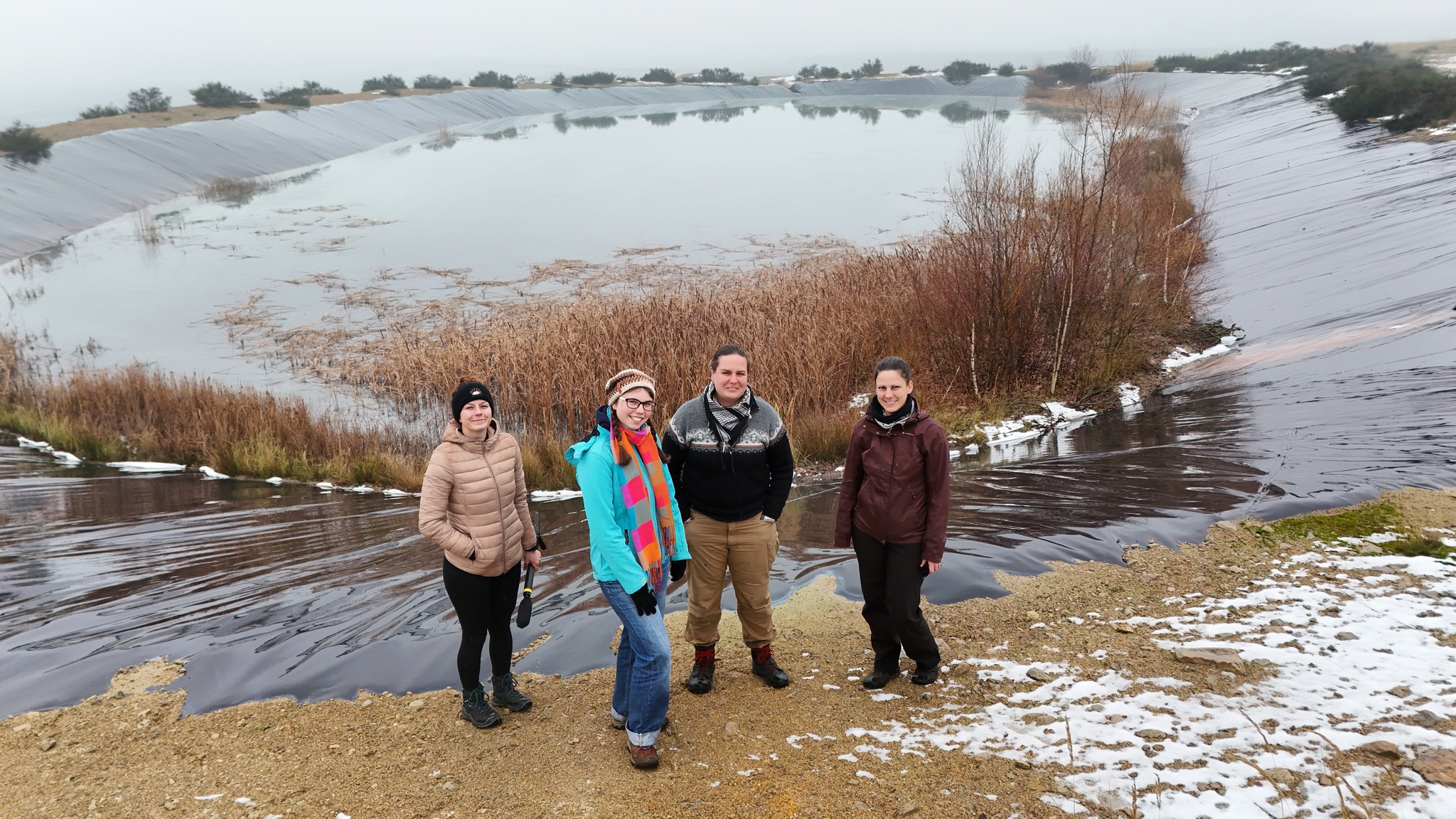
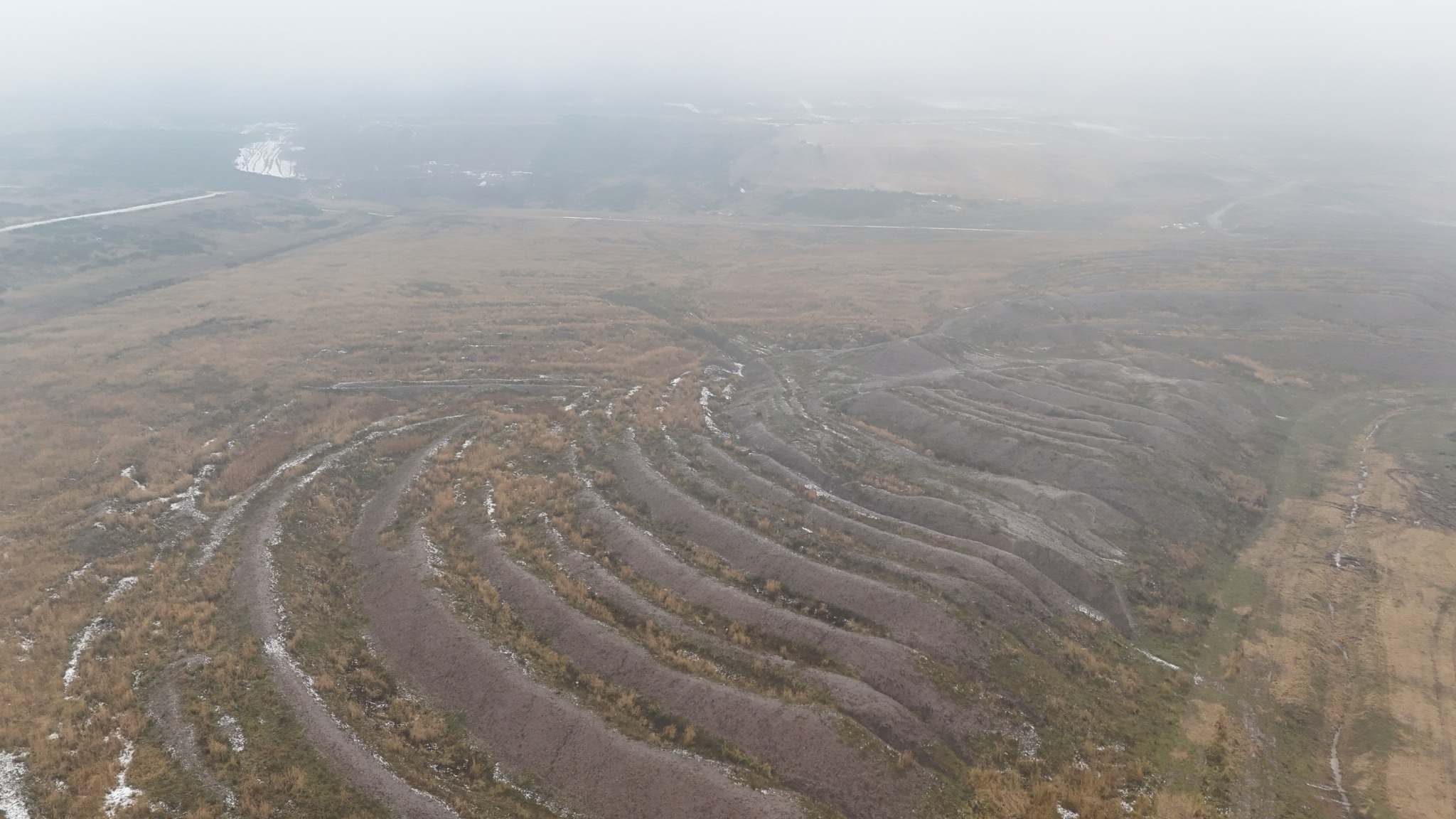
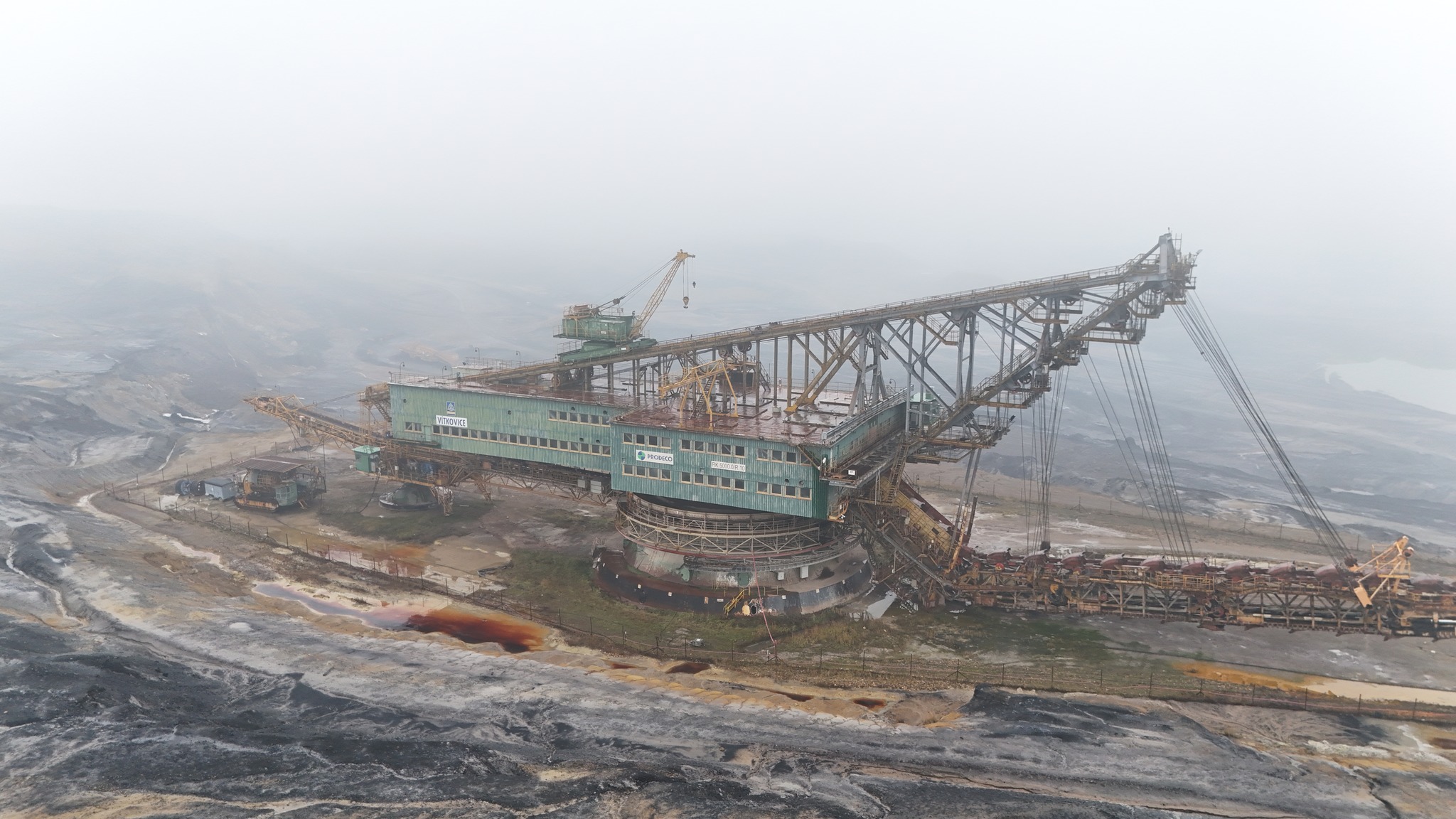
 Neither the poor weather forecast nor the mud (lots of mud) could prevent us from visiting the Czech-Slovak Army quarry in the Most region. We enjoyed the quarry in its autumnal foggy atmosphere. We visited areas that were declared a National Natural Monument in October this year and where measures to support biodiversity are already being implemented. However, the main goal of our trip was to visit the spontaneously developed water pools. Our student Ester is monitoring these pools as part of her Bachelor thesis and is preparing a virtual tour focused on the ecological restoration of aquatic ecosystems in the mining landscape of the Most Basin. If everything goes according to plan, this tour will be ready by the end of spring next year. Neither the poor weather forecast nor the mud (lots of mud) could prevent us from visiting the Czech-Slovak Army quarry in the Most region. We enjoyed the quarry in its autumnal foggy atmosphere. We visited areas that were declared a National Natural Monument in October this year and where measures to support biodiversity are already being implemented. However, the main goal of our trip was to visit the spontaneously developed water pools. Our student Ester is monitoring these pools as part of her Bachelor thesis and is preparing a virtual tour focused on the ecological restoration of aquatic ecosystems in the mining landscape of the Most Basin. If everything goes according to plan, this tour will be ready by the end of spring next year.
We would like to thank Michal Porteš, who, as always, was a great guide.
  
Published on Oct 30, 2025
 Our new learning platform DERTO has been launched! It offers teaching materials on ecological restoration freely available for download. Visit it here: derto.teamup2restore.eu Our new learning platform DERTO has been launched! It offers teaching materials on ecological restoration freely available for download. Visit it here: derto.teamup2restore.eu
Find out more in the attached press release.
#TeamUp2Restore

|
|


 At the beginning of February, we accepted a kind invitation from the Church Primary and Secondary School in Pilsen to give a lecture on restoration ecology to their third- and fourth-year students.
 It is kind of a tradition to look back at the year that just ended when a new one begins. We also would like to take a moment to remember all the experiences, the new skills we acquired, and the adrenaline that came with spending last year out on the Šumava springs. The year 2025 brought us tons of adventures out there as well as a few minor obstacles. But we proved to ourselves that neither bad weather nor the need to head into the field at five a.m. with a flashlight in hand can stop us from getting to know this habitat better.



 The traditional conference of the Czech Botanical Society took place during the weekend of the 22nd and 23rd of November. This year's theme was research abroad. As you may already know from our webpage, we are active not only in the Czech Republic but also conduct sampling in various other countries.

 In June, together with the students of our partner school in Benešov, we collected seed biomass and seeds of herbs from a species-rich donor meadow in Konopiště (
 Neither the poor weather forecast nor the mud (lots of mud) could prevent us from visiting the Czech-Slovak Army quarry in the Most region. We enjoyed the quarry in its autumnal foggy atmosphere. We visited areas that were declared a National Natural Monument in October this year and where measures to support biodiversity are already being implemented. However, the main goal of our trip was to visit the spontaneously developed water pools. Our student Ester is monitoring these pools as part of her Bachelor thesis and is preparing a virtual tour focused on the ecological restoration of aquatic ecosystems in the mining landscape of the Most Basin. If everything goes according to plan, this tour will be ready by the end of spring next year.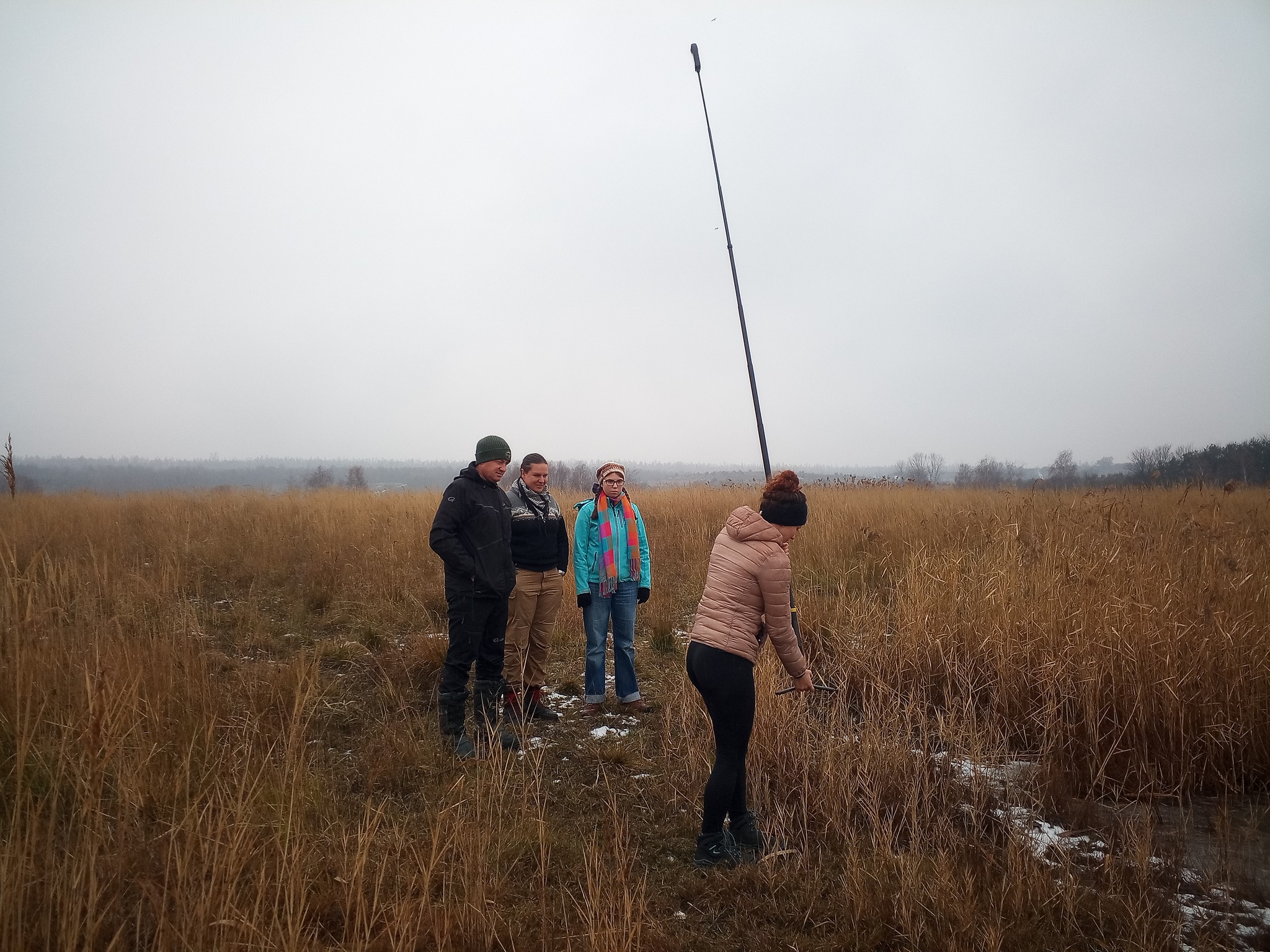
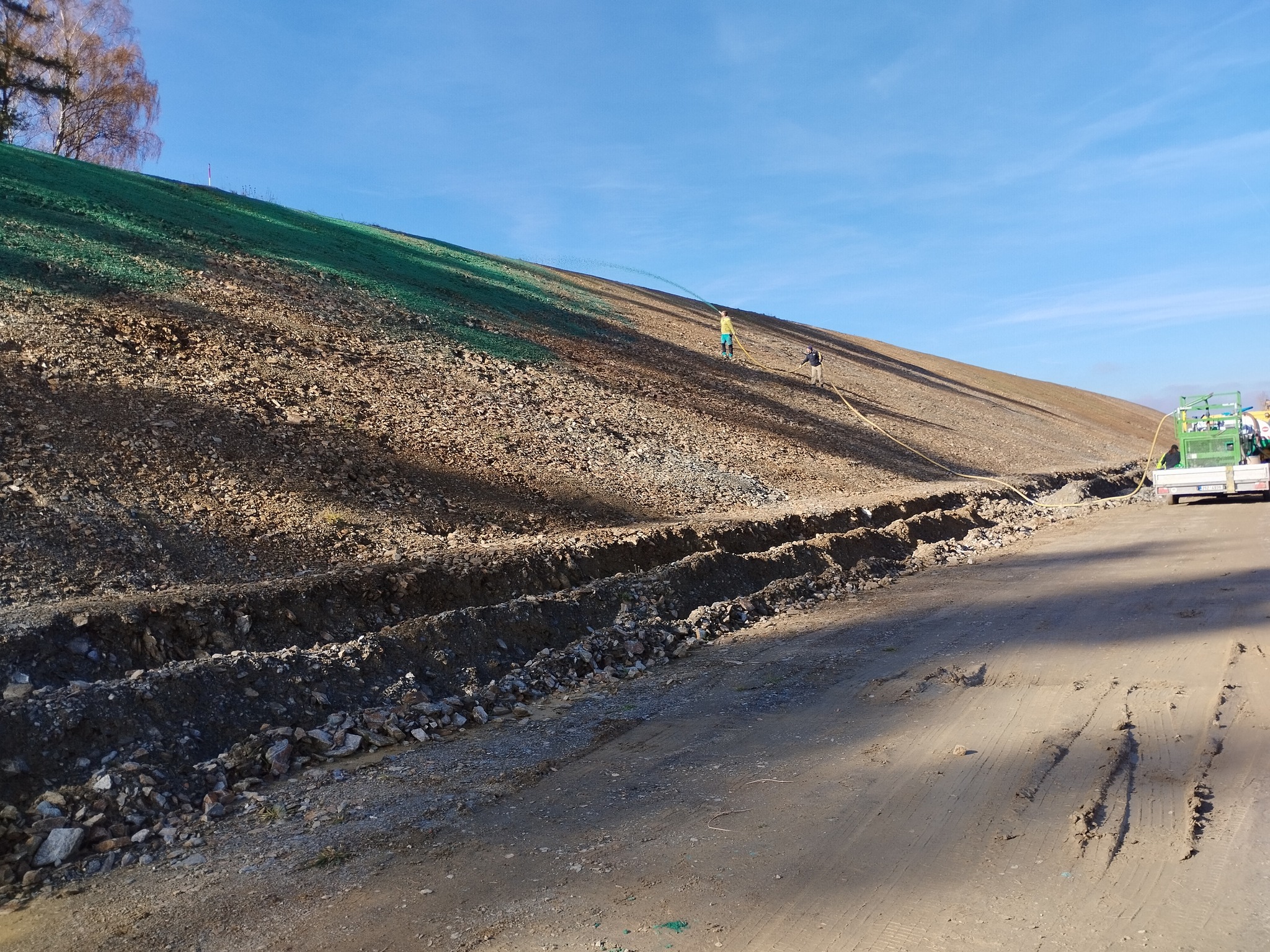
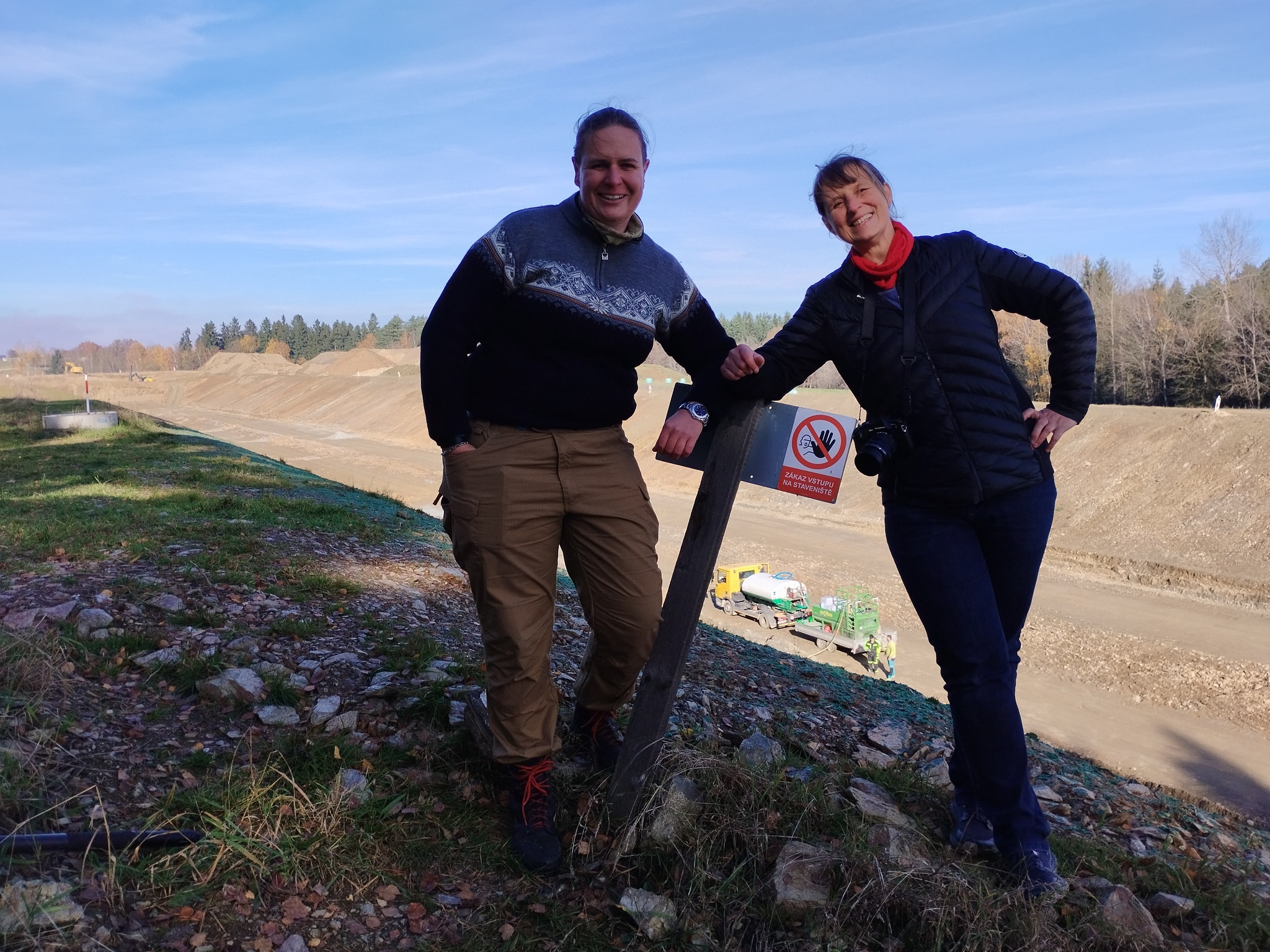
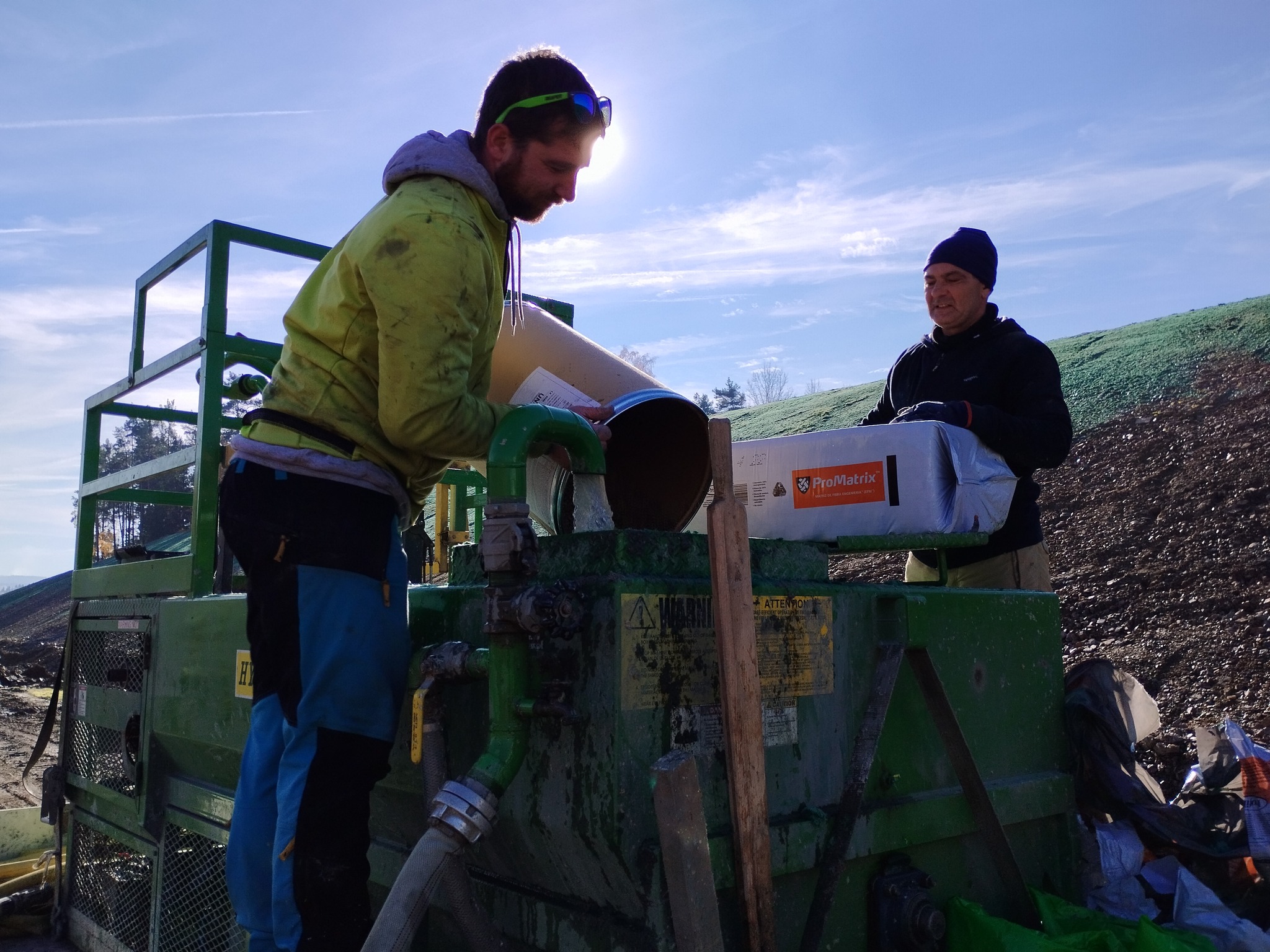
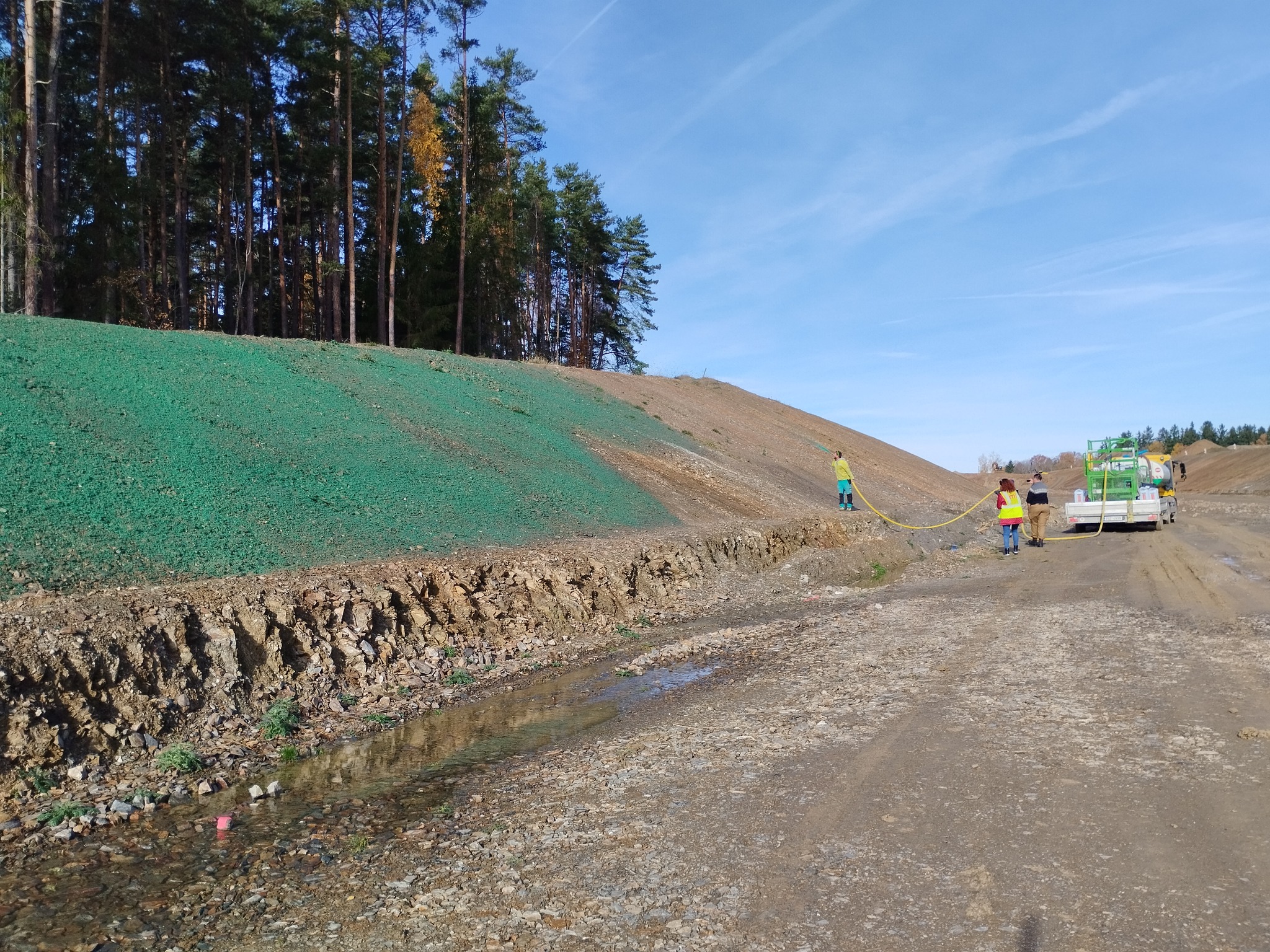 We always try to put our scientific findings into practice. An example of this approach is the use of a regional seed mixture for seeding the newly created edges of the highway near Kaplice. If all goes well, next year the slopes will gradually be covered with semi-steppe grasslands and heathlands. The seeds did not come from Africa, New Zealand, or the Netherlands, as is common practice in the seed market. They were carefully collected with a brush harvester from suitable donor meadows and forest edges no more than 50 km away. Sustainable and environmentally friendly with technical support from ZO ČSOP Šumava. The seeds were applied by hydroseeding so that they would remain on the slope until they germinated and rooted through the top layer of soil. Incidentally, as part of our ongoing project, we are also developing a new, affordable brushing harvester to support this effort.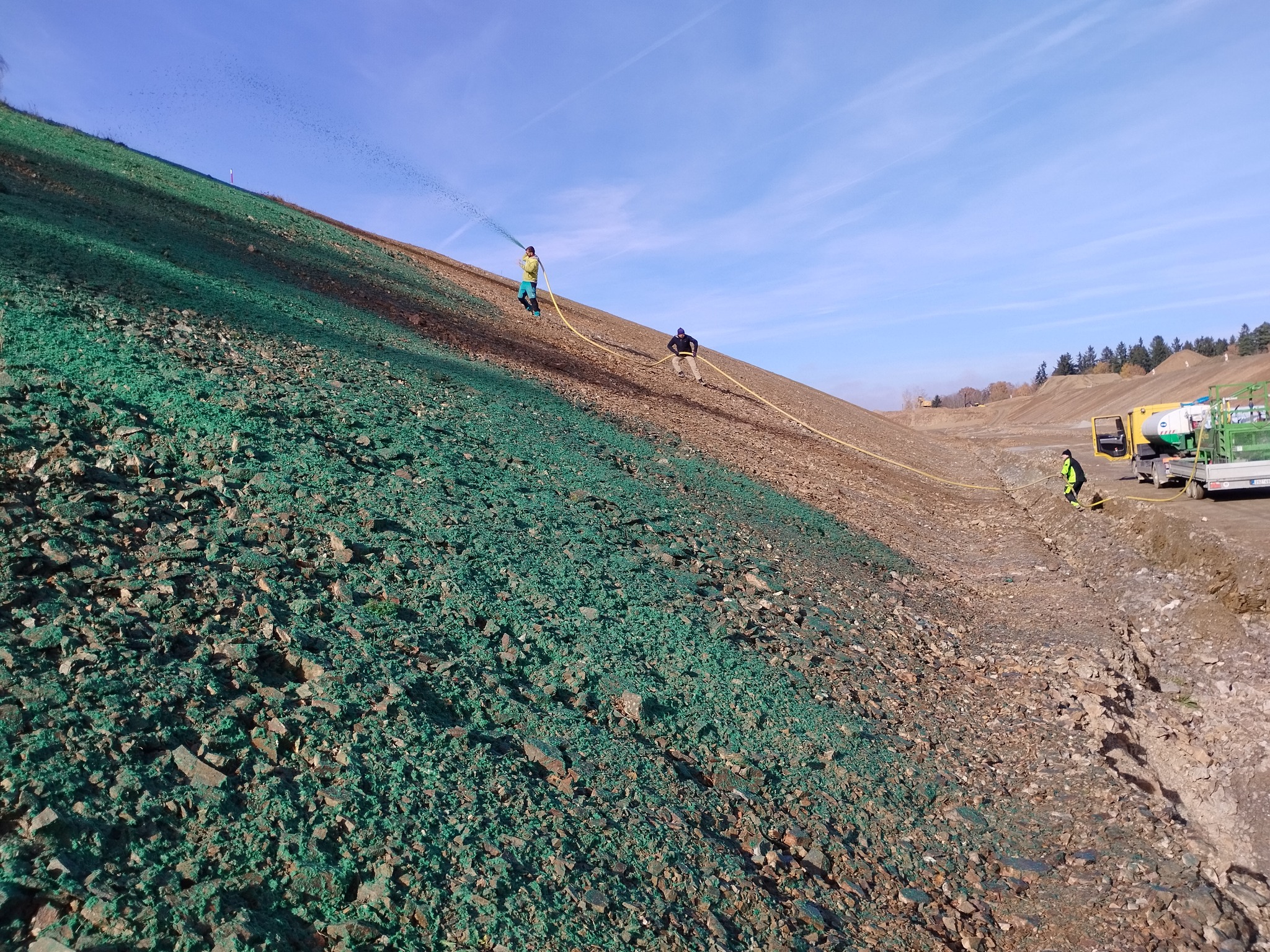
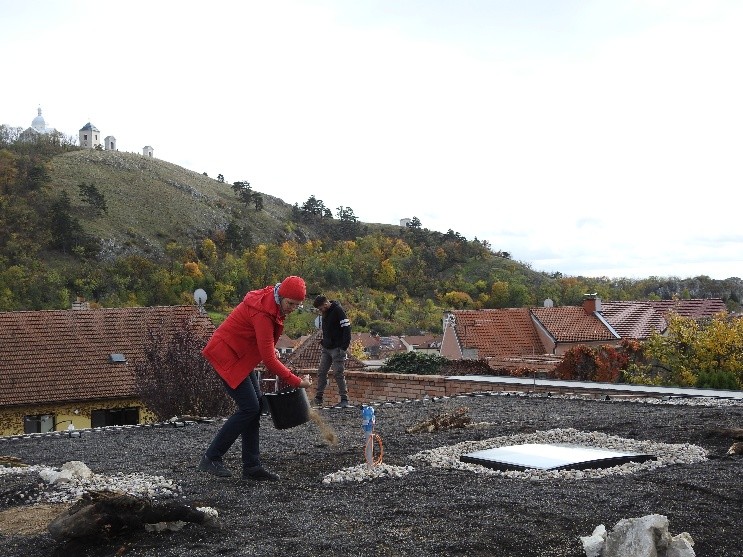
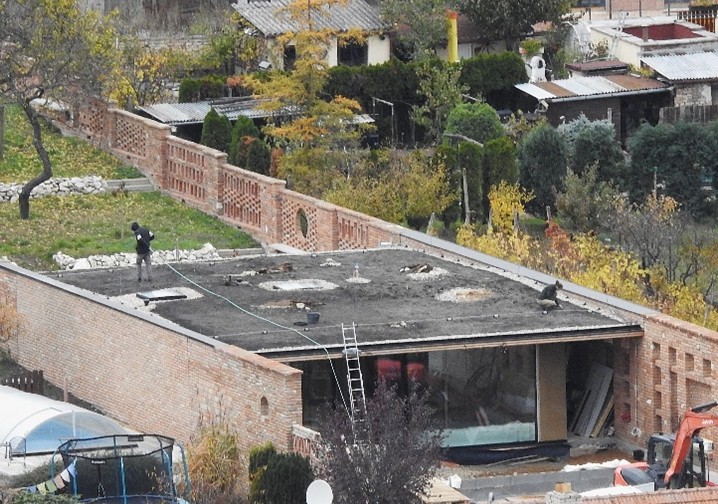
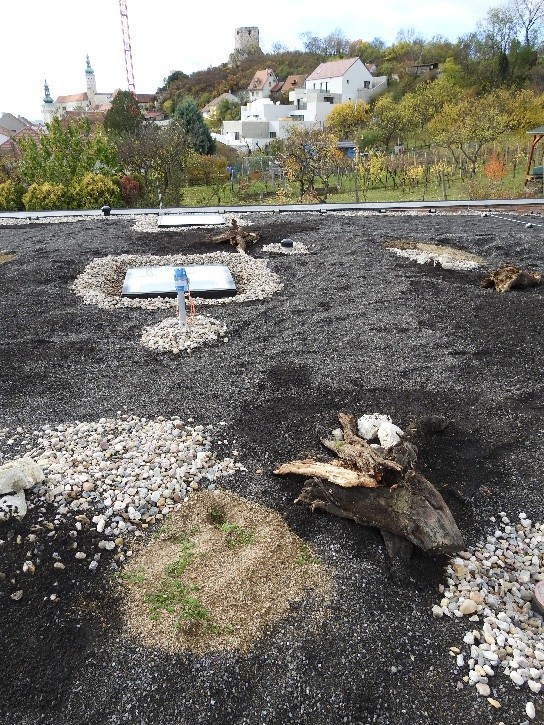
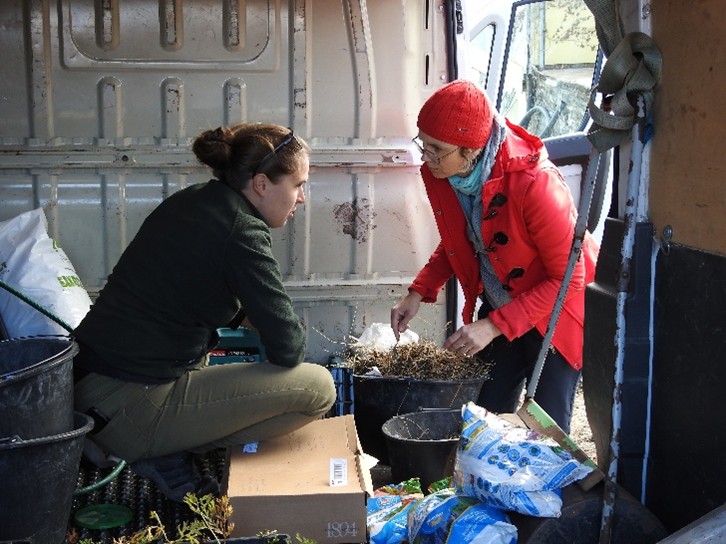
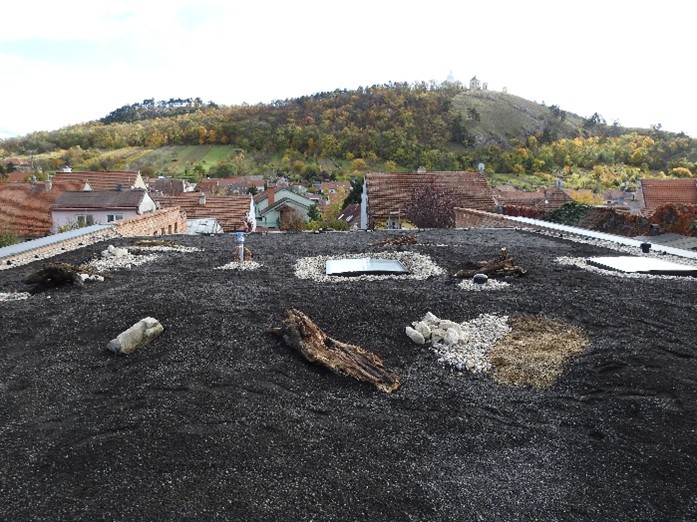 A new biodiverse green roof is being created near Kozí hrádek in Mikulov – and we were there to assist its creation. The roof was seeded with a seed mixture brushed from Stolová hora and Dunajovické kopce in Pálava, enriched with hand-collected seeds of regional origin. The aim is to create a steppe-like community similar to those that occur naturally in the surrounding area. The character of the roof is complemented by small limestone rocks and dead wood, which will provide shelter for various invertebrate species. The project is being implemented by GreenVille, with whom we are collaborating on a TAČR project aimed at supporting the biodiversity on urban green roofs.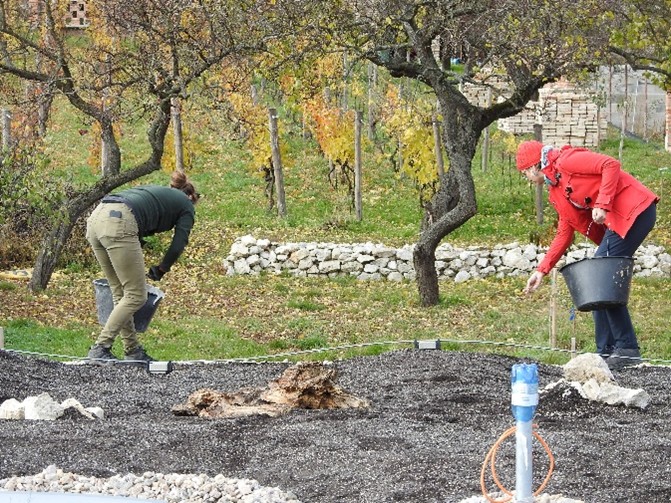


 Our new learning platform DERTO has been launched! It offers teaching materials on ecological restoration freely available for download. Visit it here: